There is a famous saying, “When you fail to plan, you plan to fail” Just like any other field, this is equally applicable in filmmaking. Any film that you are watching, be it a short film, series, or a full-fledged movie, presenting it on the screen is just the last 3% part of the whole filmmaking process. The filmmaking pipeline involves three broad and primary stages, which are:
- Pre-production
- Production
- Post-production.
Understanding the Film Production Pipeline:
Pre-Production: Setting the Stage Before “Action”
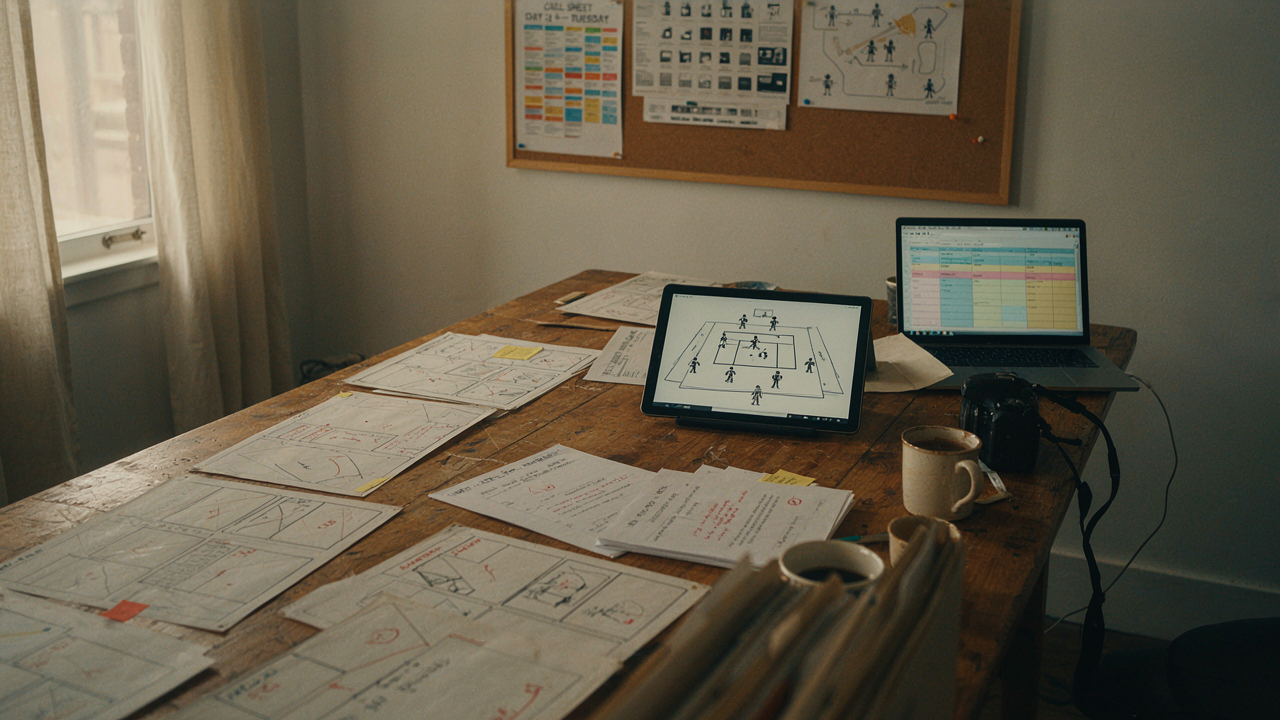
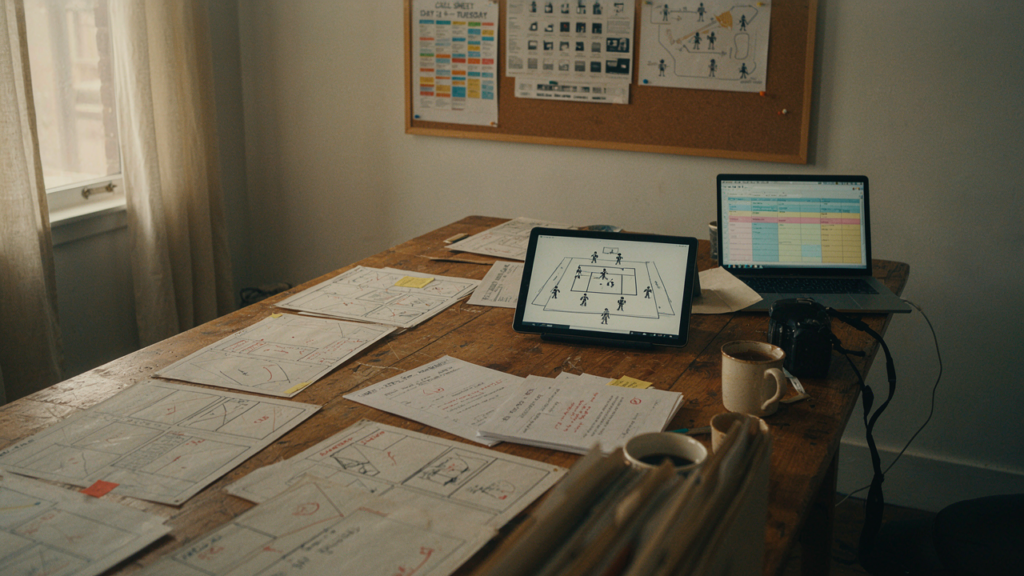
Prior to a single frame being shot, a production has to answer all possible practical questions the story raises. This stage covers script finalisation, a full script breakdown (identifying every location, prop, cast member, and piece of equipment a scene requires), scheduling, location scouting, casting, budgeting, and crew hiring.
This is the most tiring and consuming part of Pre-Production. Minor mistakes or ignorance at this stage can have a significant effect on the whole shooting process. A production that skips or rushes pre-production almost always pays for it later — in lost days, blown budgets, or scenes that simply can’t be shot as planned.
Production: Lights, Camera, Chaos- Controlled
For all commenters out there, this is the stage they think involves most of the filmmaking; of course, it’s the most important stage as it involves the “actual shoot!” It involves all the directors and assistant directors managing the daily shoots while guiding the whole crew, managing performance and scheduling on the day; the cinematographer and camera department handle image capture, the sound department records production audio, and the art, costume, and makeup departments maintain continuity scene to scene.
Post-Production: The Final Cut, Where the Story Truly Comes to Life.
It is usually said that a movie is made three times: first when it’s written, second when it’s shot on camera, and third when it goes through the final editing. Post-production is where footage becomes a film: editing determines pacing and structure, sound design and mixing build the film’s audio world, colour grading sets its visual tone, and visual effects (VFX) are added where needed. Only after all of this comes together does a film move to distribution, festivals, theatrical release, or streaming platforms.
The Real Action Happens Before “Action!”
First-time filmmakers usually think that actual creation starts when the camera starts rolling. But the real success of the film depends on the efforts taken before the camera starts rolling, that is, in the film pre-production process, where every decision either sets the crew up for a smooth day or guarantees chaos on set.
A very important blunder that can happen mid-shoot if the pre-production checklist isn’t followed efficiently, for instance: not getting all the written permissions from the owners of the predetermined locations; a script nobody properly broke down, so a prop or costume turns out to be missing when the scene is about to be shot. A schedule with no extra time built in, so one small delay in the morning pushes every single scene after it, and by evening, the light is gone and half the day’s scenes are still unshot.
Skipping this process or rushing this process can have a considerable effect on the whole shoot and can become the most fundamental reason for the shoot to run over budget, lose valuable shooting time, or fall apart completely.
It’s essential that beginners go through the whole process. Whether you’re a student working on your first short film or preparing for a longer production, this is the process that separates a controlled set from a scramble.
Step 1: Lock the Script: Every Draft After This Costs You
Nothing in pre-production can begin properly until the script is final.
- No more structural rewrites once scheduling starts
- Dialogue changes should be minor from this point forward
- Every department costume, art, sound, camera will now plan around this exact version
A script that keeps changing after departments start planning creates confusion across the entire crew.
Step 2: Do a Full Script Breakdown
This is where pre-production actually becomes a plan instead of a document. A Script Breakdown For Filmmakers means going through the script scene by scene and extracting every practical requirement it implies. Because it should be the very base of all the pre-planning done by the intertwined departments. At e-Drishyam Film School, script breakdown is taught as a core practical skill, not a theory lesson — students break down real scripts and see exactly how one document turns into a full production plan.
Step 3: Build the Shooting Schedule
To build a shoot schedule, many factors need to be considered way in advance, for instance: availability of the actors, location of the shoot, day & night scene grouping, build in buffer time for setup, lighting changes, and the inevitable delays every shoot day has.
Step 4: Scout and Lock Locations
Locations should be locked well before the shoot date. A location that “should be fine” without written permission is one of the most common reasons shoots get shut down midway.
Step 5: Cast and Confirm Every Role
Finalise principal cast first, since schedule dates are often built around them.
Confirm background artists and any specific physical/skill requirements. This is the most important part, as managing this huge human resource is primary for scheduling the shoots.
Step 7: Plan the Budget Around the Breakdown, Not Guesswork
Budgeting after the breakdown, rather than estimating upfront, is what keeps a production from running out of money mid-shoot.
Step 8: Arrange Equipment and Technical Requirements
Booking equipment early avoids the common last-minute scramble when a rental house doesn’t have what’s needed on the exact date required.
Step 9: Hold a Production Meeting Before Day One
Every department head should walk into the shoot with the same information. A final production meeting typically covers:
- The locked schedule, scene by scene
- Confirmed cast and crew call times
- Location logistics and access details
- Contingency plans for weather or other disruptions
Why This Process Matters More Than It Seems
Pre-production isn’t the exciting part of filmmaking, but it’s the part that decides whether the exciting part actually goes smoothly. A well-run set, on schedule and within budget, is almost always the result of disciplined pre-production, not luck on the day.
This is exactly why practical, hands-on training matters. At a filmmaking course in Thane or a filmmaking course in Mumbai, students shouldn’t just learn filmmaking theory; they should actually run a breakdown, build a schedule, and manage a real production plan before they ever step onto a set.
Learning the Pre-Production Process at e-Drishyam Film School
At e-Drishyam Film School, recognised as one of the best filmmaking courses in Thane, students work through the full pre-production process on real projects: script breakdowns, scheduling, budgeting, and location planning under the guidance of faculty with real industry experience.
This hands-on approach means students don’t just understand pre-production in theory; they’ve actually built a shooting schedule, broken down a script, and sat through a production meeting before they graduate the exact skills a set assistant director, production manager, or line producer is expected to have on day one of a real job.