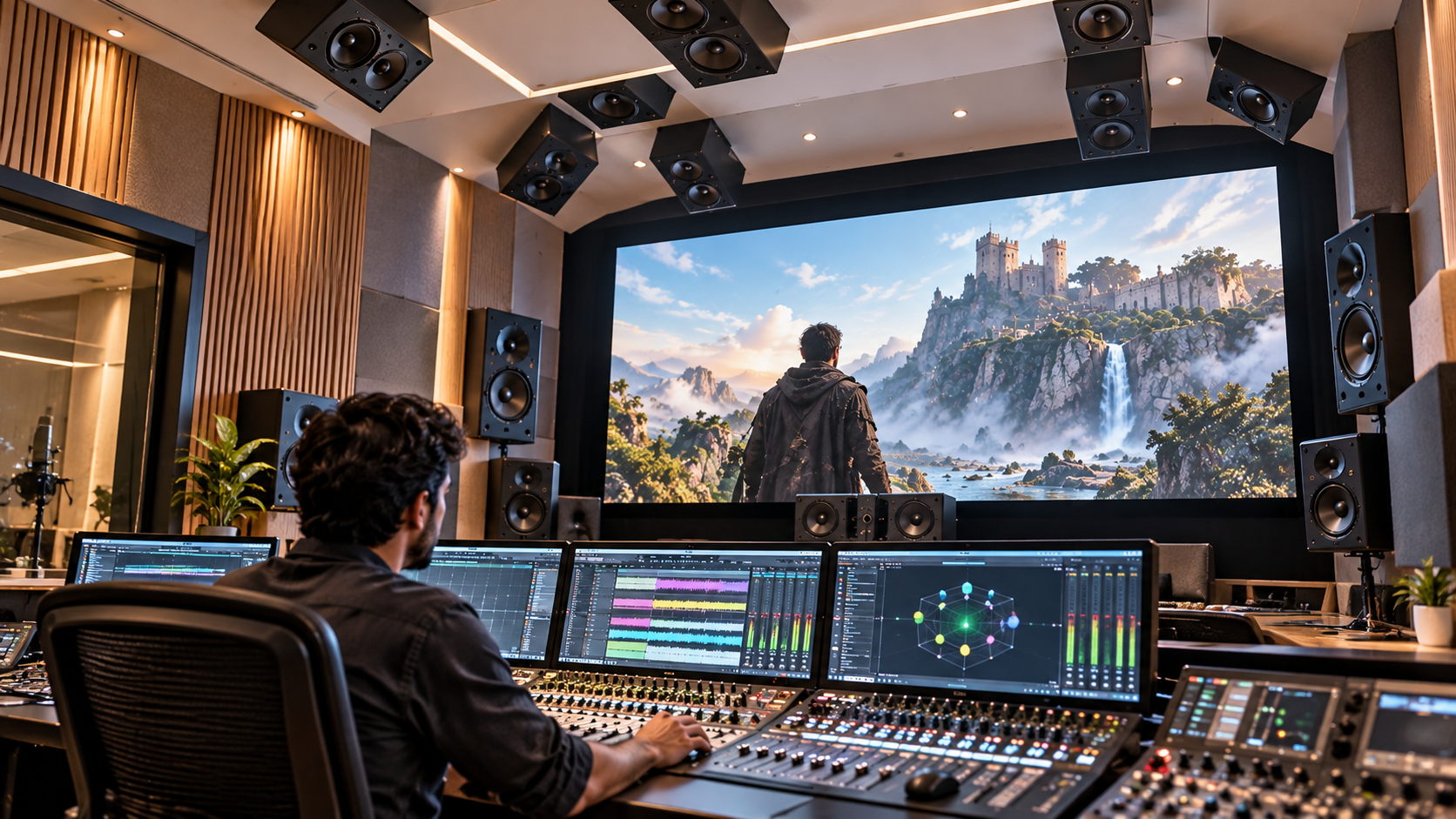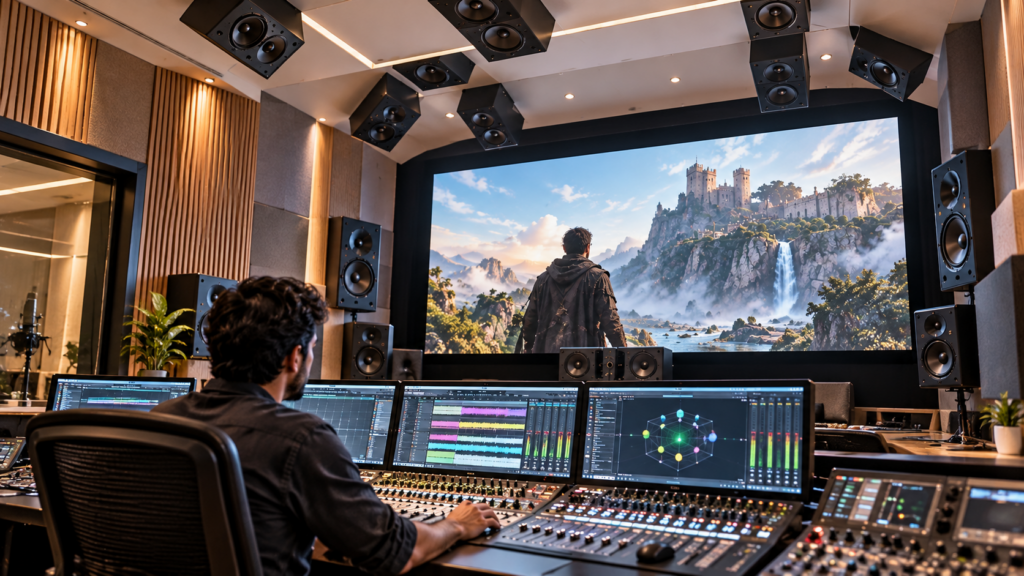
Close your eyes during a well-mixed theatre scene and notice where the helicopter is. It isn’t on the screen. It starts overhead, drifts across the ceiling and settles behind you, and your shoulders tense before your brain catches up. That is Dolby Atmos doing what stereo and 5.1 never could. For anyone training to become a sound designer, understanding how it works is fast becoming as basic as cutting a dialogue track.
From Channels to Objects: The Real Shift
Older surround formats were channel-based. As one explainer puts it, mixing-stage positioning in the surround field meant adjusting levels for each speaker, which was fairly immersive but crude by comparison. Once you finished the mix, you baked every sound into a fixed number of channels.
Atmos works differently. Instead of mixing everything in the studio and distributing the final mix, object-based audio distributes sounds independently and mixes them only during reproduction. Each object carries its audio plus position data. During playback, each theatre’s system renders the objects in real time based on where its loudspeakers are.
Here’s what that means in plain language. You’re no longer mixing for a speaker layout. You place sounds in a space, and the playback system figures out how to deliver them.
Beds and Objects: How a Mix Is Built
An Atmos mix has two kinds of building blocks, and knowing when to use each is half the craft.
- Beds are the traditional channel-based layer. In theatres, a 7.1.2 bed commonly carries ambience stems or centre dialogue, leaving 118 tracks for objects.
- Objects are the sounds that need to move or sit precisely in 3D space.
There’s a practical catch. A bed can only feed two height channels, so you can’t pan overhead sounds from front to back with it. Working mixers say much the same: if they want height on a sound, they make it an object. A steady city ambience might live happily in the bed, while a drone, a gunshot ricochet, or a thunderclap rolling across the room earns its own object.
What Actually Changes for the Sound Designer
You design in three dimensions now. Left, right and surround used to be the whole map. Height adds a new axis and changes how you build a scene. Rain can fall from above instead of hissing around the room. A character’s whispered thought can sit slightly behind the audience’s shoulder.
Restraint matters more, not less. Most beginners don’t realise that having 118 objects available doesn’t mean you should use them. In our experience, the strongest Atmos mixes are the ones where movement is motivated by the story. If a sound travels across the room just because it can, the audience notices the trick instead of the film.
Dialogue is still the anchor. Immersive formats don’t change the golden rule: the audience must understand the words. Good mixers earn their pay by keeping dialogue steady and clean while ambience, music, and effects open up around it.
Mixing is a different discipline. Atmos work means learning the renderer, working in a calibrated room and, as one veteran mixer notes, unlearning some familiar techniques. Delivery standards are also strict. The same interview mentions that mixes exceeding a set loudness ceiling are liable to be rejected. Checking your platform’s exact delivery spec before you start is a habit worth building early.
Spatial Audio Isn’t Only for Big Screens
The cinema hall is where Atmos began, but it’s not where most people will hear your work. Home systems, soundbars and headphones all get a version of the mix. For home playback, Atmos uses spatial coding to reduce the audio to a maximum of 16 concurrent elements that adapt dynamically to the content, then matches the presentation to the installed speaker configuration. In India, this is what matters most. A huge share of your audience will watch on a phone with earphones or a basic home setup. A thoughtful immersive mix should still work there, so you need to check your work on more than one playback system, not only in the mixing room.
Where Immersive Sound Is Really Won or Lost
Here’s where things get interesting. The quality of an Atmos mix is decided long before mixing. Immersive sound can only be as good as the material it’s built from, and three habits make the biggest difference:
- Record clean dialogue on set. Spatial formats expose noise, room echo and sloppy takes. No renderer can fix muddy dialogue.
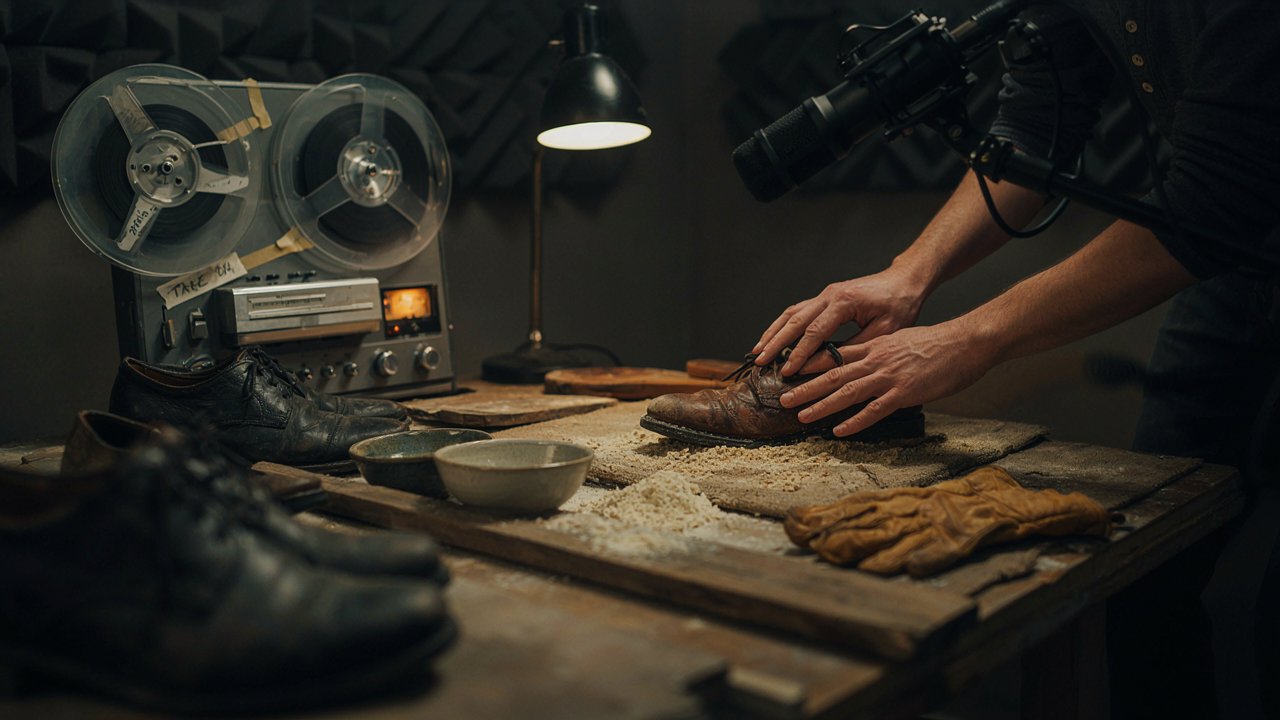
- Capture your own ambiences and wild tracks. Location-specific sound gives a scene its identity. A generic library loop rarely sounds like the actual place.
- Plan sound during pre-production. Ask early which moments in the script deserve height, movement or silence. That conversation between director and sound designer is where the strongest ideas usually come from.
Foley and sound effects deserve the same care. Layered, well-recorded effects give you more to place and shape, and they make objects feel physical instead of synthetic.
Making Sense of It on a Beginner’s Budget
You don’t need a Dolby-certified studio to start learning. What you need is the underlying thinking: how channels differ from objects, how to layer a soundscape, how to balance dialogue against everything else and how to judge a mix on different speakers. Those skills transfer to every format, and when you do get access to an Atmos room, you’ll know what to do with it.
Short films and ad films are a good place to practise. The runtimes are short, the stakes are manageable, and a single scene with rain, traffic and a whispered conversation can teach you more about spatial layering than a month of theory.
The Bottom Line
Dolby Atmos hasn’t replaced the fundamentals of sound design. It has raised the bar. Story-driven choices, clean recordings and disciplined mixing matter more now, because immersive formats make both good and careless work easier to hear.
If you’re curious about sound as a career, whether in post-production, ad filmmaking, OTT or features, start with the craft and keep up with the technology. At e-Drishyam Entertainment & Film School in Thane, our sound design programmes are taught by industry professionals, with hands-on practice rather than theory alone. You can book a free demo lecture and see how we teach it.