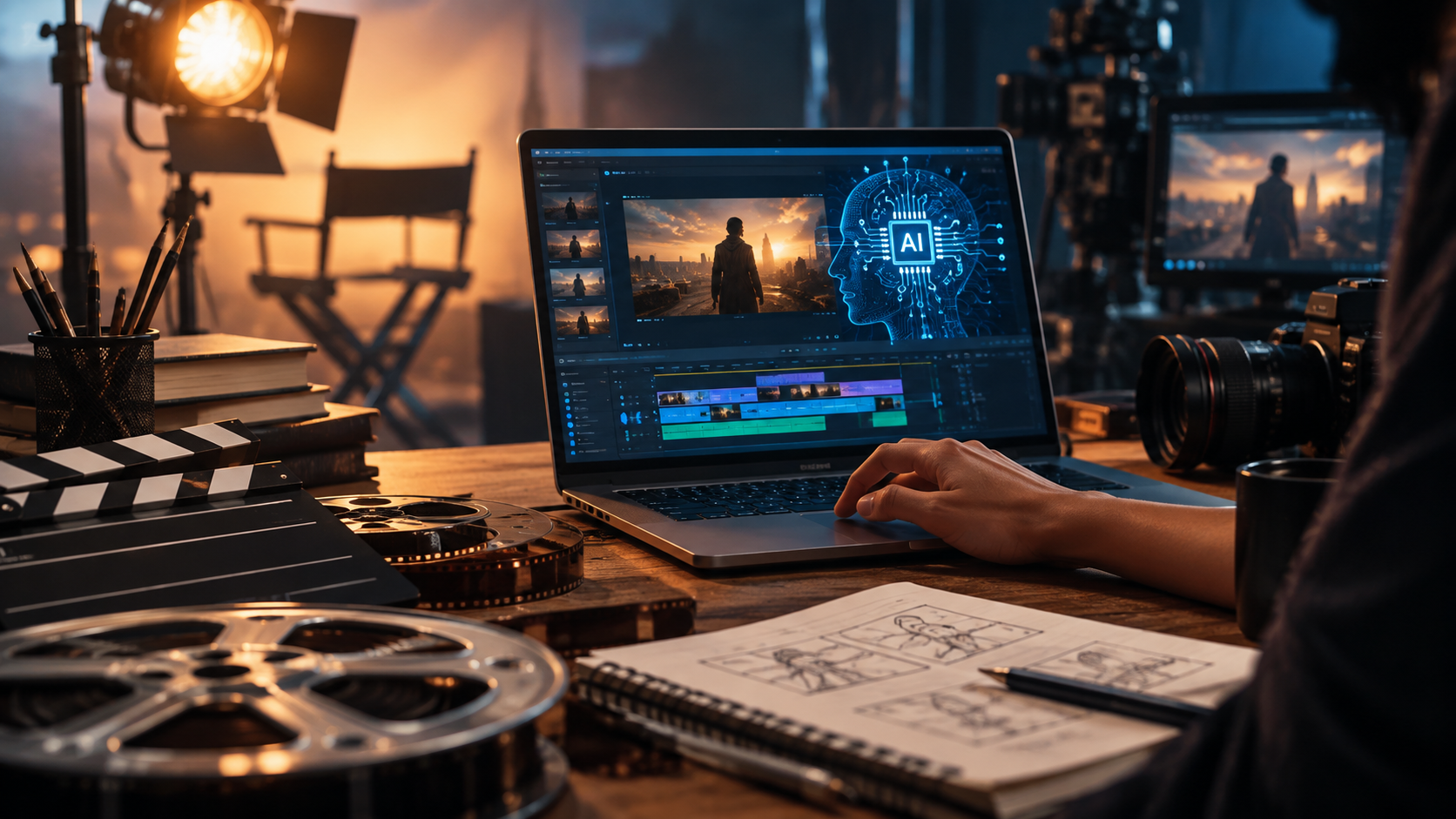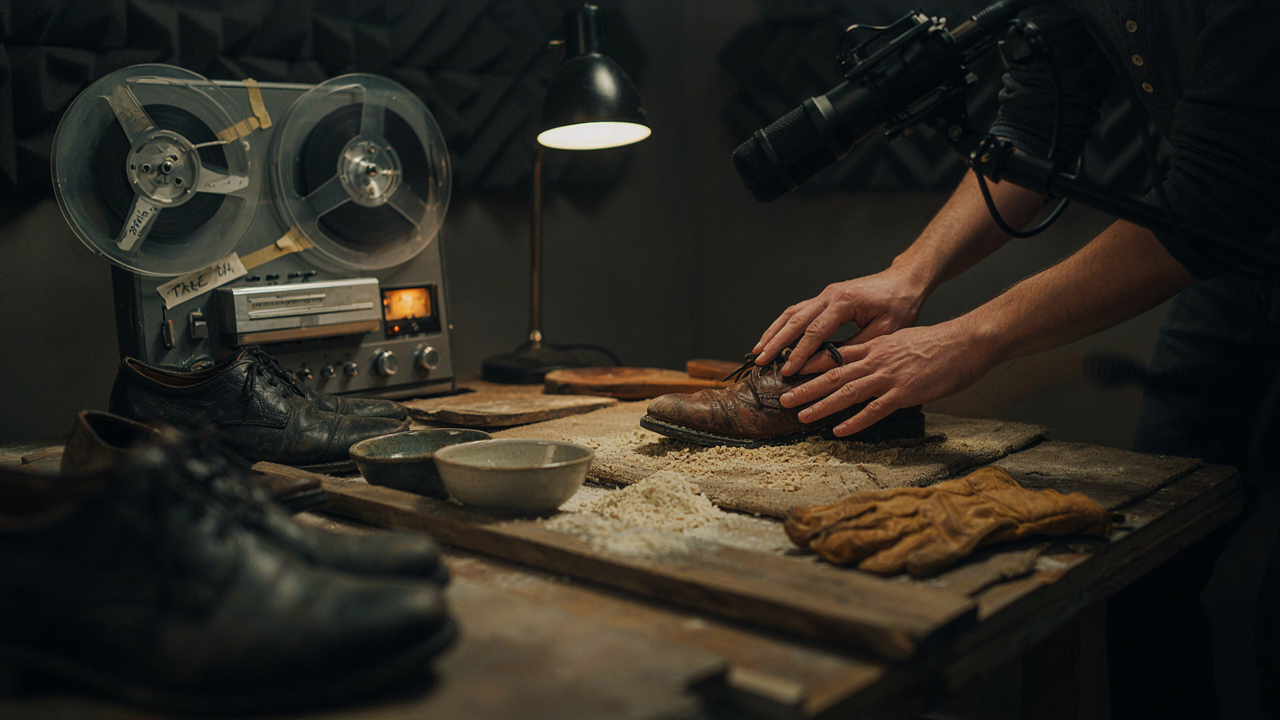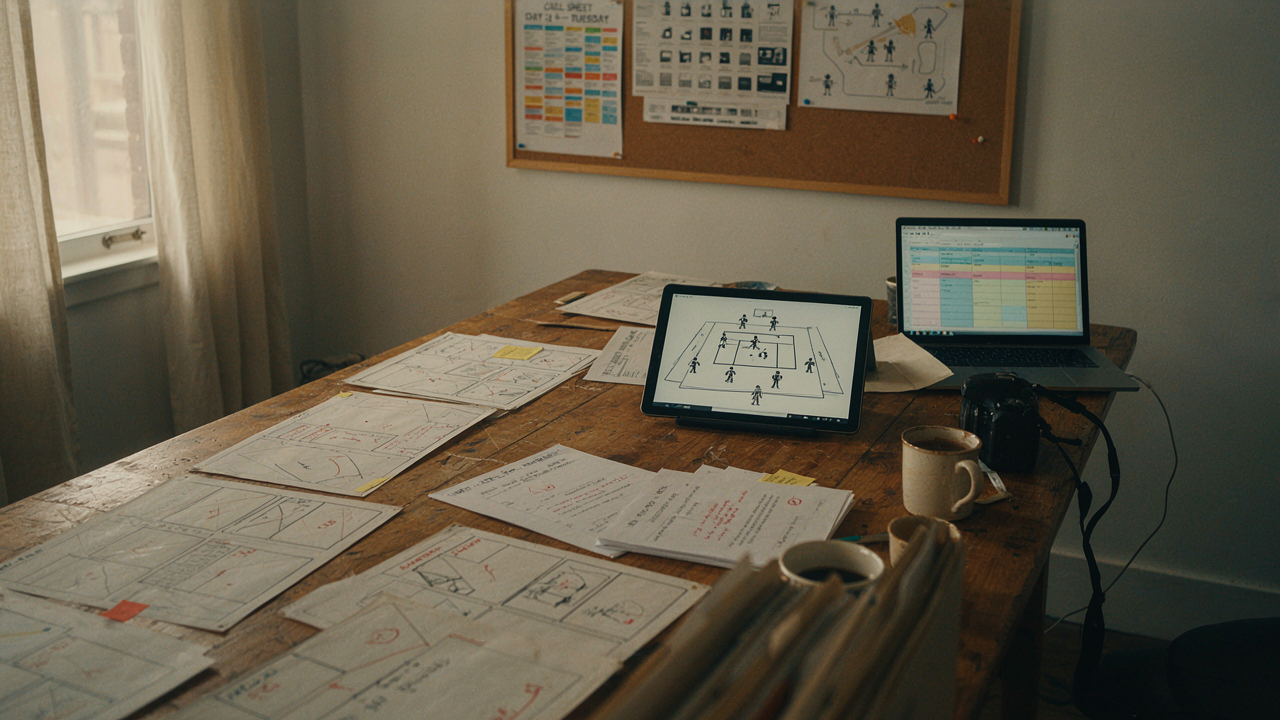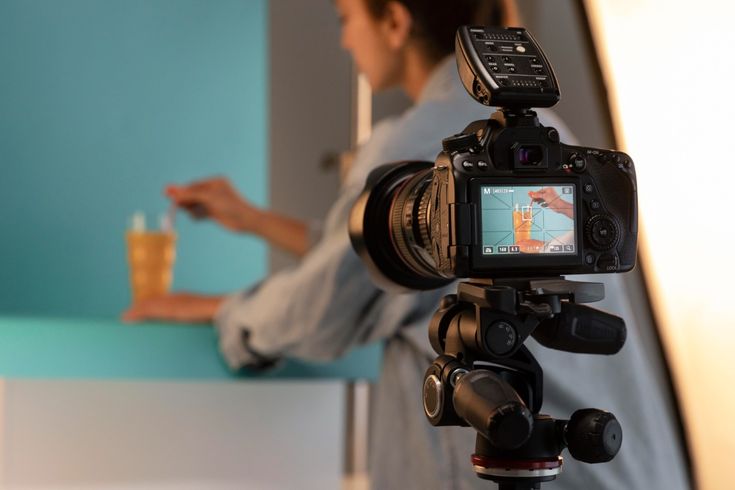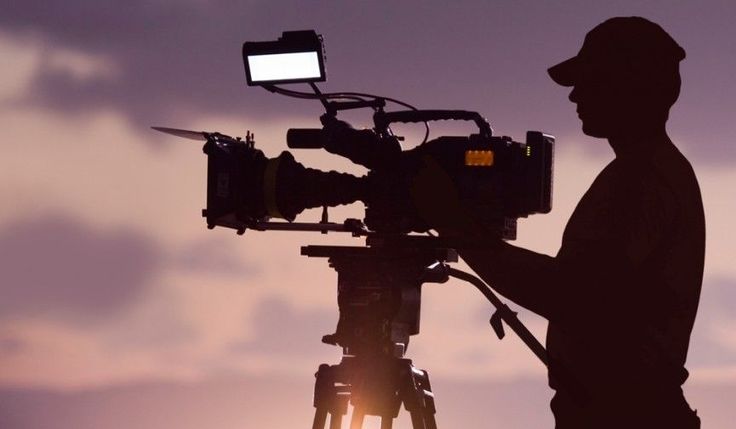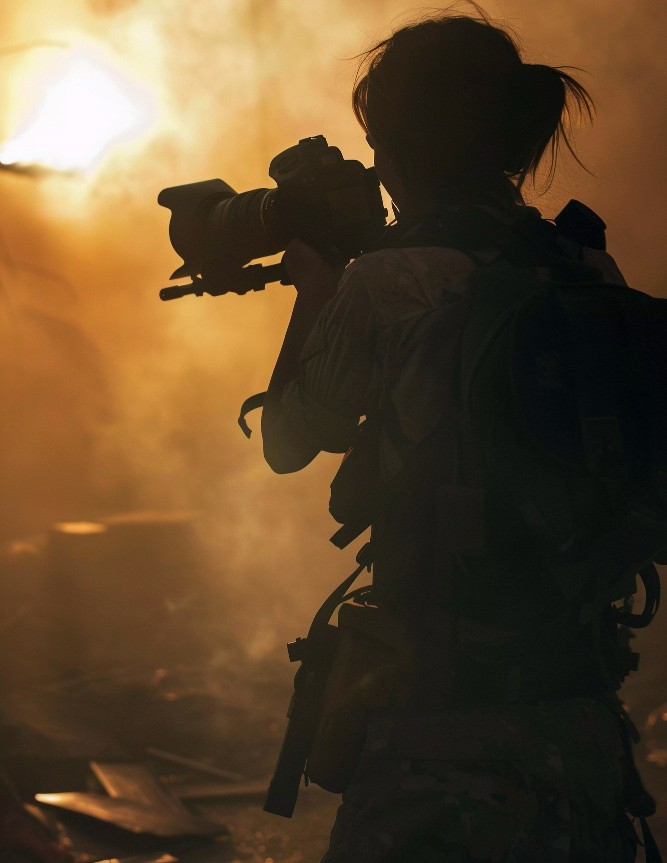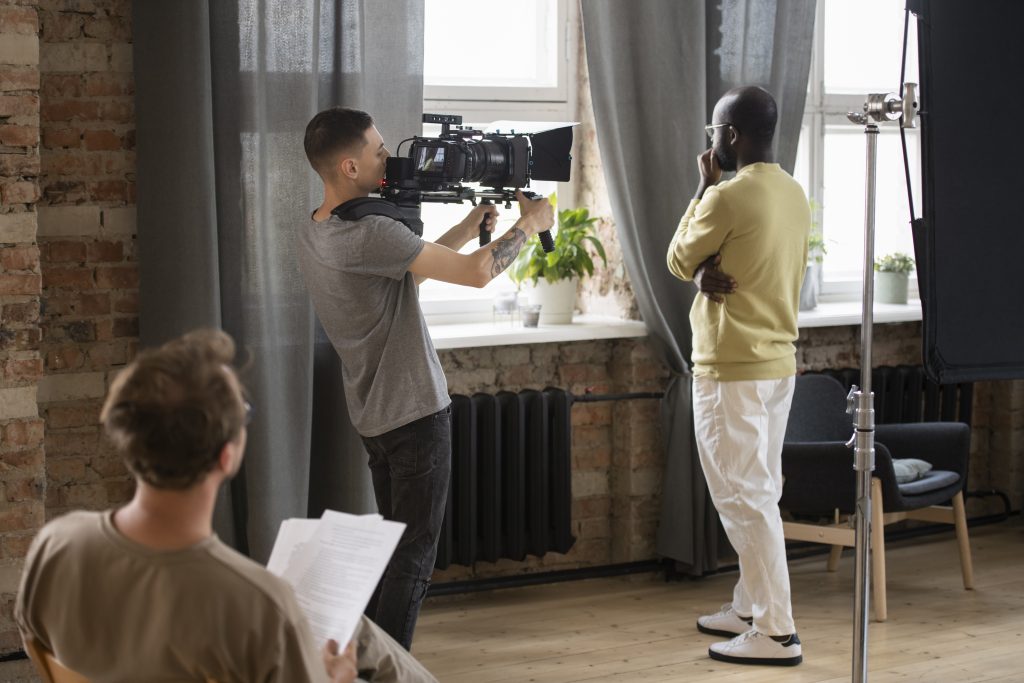
There’s a scene in almost every great film where you stop paying attention to the dialogue for a moment, because the image alone is doing something to you. The way the light falls on a face. The angle that makes a character look impossibly small against the world. The framing that puts you slightly on edge without knowing why.
That’s cinematography. And what most people don’t realise is that none of it is accidental.
Every frame in a well-made film is a deliberate decision, a conversation between the cinematographer, the director, and the story itself. If you’ve ever watched a film and felt something without being able to explain why, there’s a good chance the answer lives in the cinematography. At e-Drishyam, when students first begin to understand this, you can visibly see the shift in how they look at everything, screens, spaces, light, and even everyday rooms. That shift is the beginning of thinking like a visual storyteller.
This is your starting point.
What Cinematography Actually Means
Cinematography is the art and science of capturing images on camera, but that definition barely scratches the surface. In practice, it encompasses every visual element of a film: where the camera is placed, how it moves, how light sculpts the scene, and how the frame is composed.
The cinematographer, also called the Director of Photography or DP, is responsible for translating a story’s emotion into visual language. It’s a role that demands both technical precision and deeply intuitive artistic judgment. A good DP doesn’t just operate a camera. They make you feel the story through your eyes before a single word is spoken.
Understanding the basics of cinematography isn’t only relevant if you want to become a DP. Directors, editors, production designers, and even actors benefit enormously from understanding how the camera sees the world.
Part One: The Camera, Your Primary Storytelling Tool
Understanding Shots and Framing
Before we talk about lenses or settings, let’s talk about shots, because the size and type of shot you choose are among the most direct ways to communicate with your audience.
An Extreme Wide Shot establishes location and context. It shows the character as a small figure within a large environment, immediately communicating isolation, scale, or vulnerability. A Medium Shot is the workhorse of dialogue scenes, close enough to read emotion, wide enough to include gestures and body language. A Close-Up isolates a face or an object, forcing the audience to pay attention to exactly what you want them to feel. And an Extreme Close-Up, an eye, a trembling hand, a detail on a surface, creates intimacy or tension that’s almost uncomfortable in its intensity.
The choice between these isn’t arbitrary. It’s always driven by what the story needs in that moment.
Camera Angles in Filmmaking: Where You Place the Camera Changes Everything
This is where things get genuinely fascinating. Camera angles in filmmaking are among the most powerful tools for shaping how audiences perceive characters and situations, often without them consciously registering why.
A low-angle shot, where the camera looks up at the subject, makes them appear dominant, powerful, even threatening. Think of how villain introductions so often use this angle; it puts the audience in a psychologically submissive position before a single line of dialogue is delivered.
A High Angle does the opposite. Looking down on a character makes them appear vulnerable, small, defeated, or overwhelmed. It’s an editorial choice disguised as a camera position.
The Eye-Level Shot is neutral; it places the audience on equal footing with the character, creating realism and identification. Most naturalistic drama relies heavily on this angle precisely because it doesn’t impose a power dynamic.
The Dutch Angle, a tilted camera, is used to signal psychological unease, moral ambiguity, or disorientation. Used sparingly, it’s effective. Used constantly, it loses its meaning entirely.
What’s critical to understand about camera angles in filmmaking is that they speak a visual grammar that audiences have absorbed through decades of watching films. They read these angles instinctively, even if they couldn’t name them. As a filmmaker, knowing this grammar means you can use it or deliberately subvert it for effect.
Camera Movement, Static vs. Dynamic
A static camera creates stillness, control, and often a sense of unease or formality. A moving camera creates energy, intimacy, or chaos depending on how it moves.
A Dolly move, in which the camera physically tracks forward or backwards, creates a sense of entering or retreating from a space. It feels deliberate, cinematic. A Handheld camera introduces urgency and rawness; it’s the visual shorthand for documentary realism or anxiety. A Pan or Tilt follows action within the frame, while a Crane or Drone shot opens the world up entirely, offering a perspective that feels almost godlike.
The rule beginners most need to hear: camera movement should always be motivated by something happening in the story. Move the camera because the story demands it, not because you can.
Part Two: Lighting, The Mood Lives Here
If camera placement is the grammar of cinematography, lighting is its emotion. The same set, the same actor, the same lens, light it differently, and you have an entirely different scene, an entirely different film.
Hard Light vs. Soft Light
Hard light comes from a small, direct source, harsh, shadow-creating, and dramatic. Think of a single bare bulb, bright midday sun, or a spotlight. It creates strong contrast, defined shadows, and a sense of tension or rawness.
Soft light comes from a large or diffused source, gentle, flattering, and shadow-free. Think of a cloudy day or light bouncing off a white reflector. It wraps around the subject, reducing harshness and creating warmth or a sense of safety.
In our experience, this one distinction, hard versus soft, unlocks an enormous amount of intentionality for students just beginning their cinematography course. Understanding which mood you’re trying to achieve tells you immediately which quality of light you need.
Three-Point Lighting, The Foundation
The classic three-point lighting setup consists of a Key Light (the primary source that defines the look), a Fill Light (softer, from the opposite side, to control shadow depth), and a Back Light (placed behind the subject to separate them from the background and add dimension).
This setup is foundational, not because it’s the only approach, but because understanding it gives you a framework to build from, and to break intentionally when the story calls for it.
Colour Temperature and Mood
Warm light, amber, golden, communicates safety, nostalgia, romance. Cool light, blue, clinical white, communicates coldness, alienation, or threat. This is why horror films so often bathe their scenes in cool tones, while domestic comfort scenes lean toward warm lamplight.
Understanding colour temperature is one of those cinematography basics that immediately changes how you scout locations, plan shoots, and build mood boards. Light isn’t just practical, it’s psychological.
Part Three: Composition, The Art of the Frame
Composition is how you arrange everything within the rectangle of your frame. It’s where visual art and filmmaking most openly overlap.
The Rule of Thirds
Divide your frame into a grid of nine equal rectangles, three rows and three columns. The four points where the grid lines intersect are your power positions. Place your subject’s eyes, a key object, or your horizon line at one of these intersections and the frame immediately gains visual balance and tension.
The rule of thirds is a starting point, not a law. But understanding why it works and training your eye to compose instinctively within it will dramatically sharpen your frames.
Leading Lines and Depth
Lines within the frame, roads, corridors, shadows, and architectural edges guide the viewer’s eye through the image. Used intentionally, they direct attention and create depth. A long corridor leading the eye toward a character in the distance does something emotionally that a flat, shallow composition simply cannot.
Depth is everything in cinematography. Working in layers, foreground, subject, background, creates images that feel like a world, not a photograph.
Negative Space and Breaking the Rules
Negative space, the empty area around your subject, is not wasted frame space. It communicates isolation, contemplation, and longing. A character placed in a small corner of a vast, empty frame tells you something about their state of mind that a tightly framed close-up cannot.
Here’s the truth about composition rules: they exist to give you a language. Once you’ve internalised them, deliberately breaking them becomes a powerful creative choice, not an error.
Tying It All Together
Camera, light, and composition don’t operate in isolation. Every great frame is the result of all three working in concert, a specific angle chosen for its psychological effect, lit to create the right emotional temperature, and composed to guide the eye and tell a story within a single image.
This is what a structured cinematography course gives you: not just the technical vocabulary, but the intuition to deploy it. The ability to walk into a location and immediately see it as a series of potential frames.
Where Do You Go From Here?
Cinematography basics are learnable. The grammar can be studied. The eye can be trained. But nothing accelerates that process like getting behind a camera with real equipment, real mentorship, and real feedback on your work.
At e-Drishyam Entertainment & Film School in Thane, our filmmaking and cinematography programmes are built around exactly this philosophy, hands-on production experience guided by faculty who have spent decades working in India’s film and television industry. If you’re serious about learning to see the way a filmmaker sees, come spend an hour with us first.
Book a demo lecture. The frame is waiting.